BY JIMMY SHOCKLEY, Eastern Shore Post —
Forty years ago, a 34-year-old Paul Nolz started the Paul Nolz Soccer Camp, which in its first year had six participants.
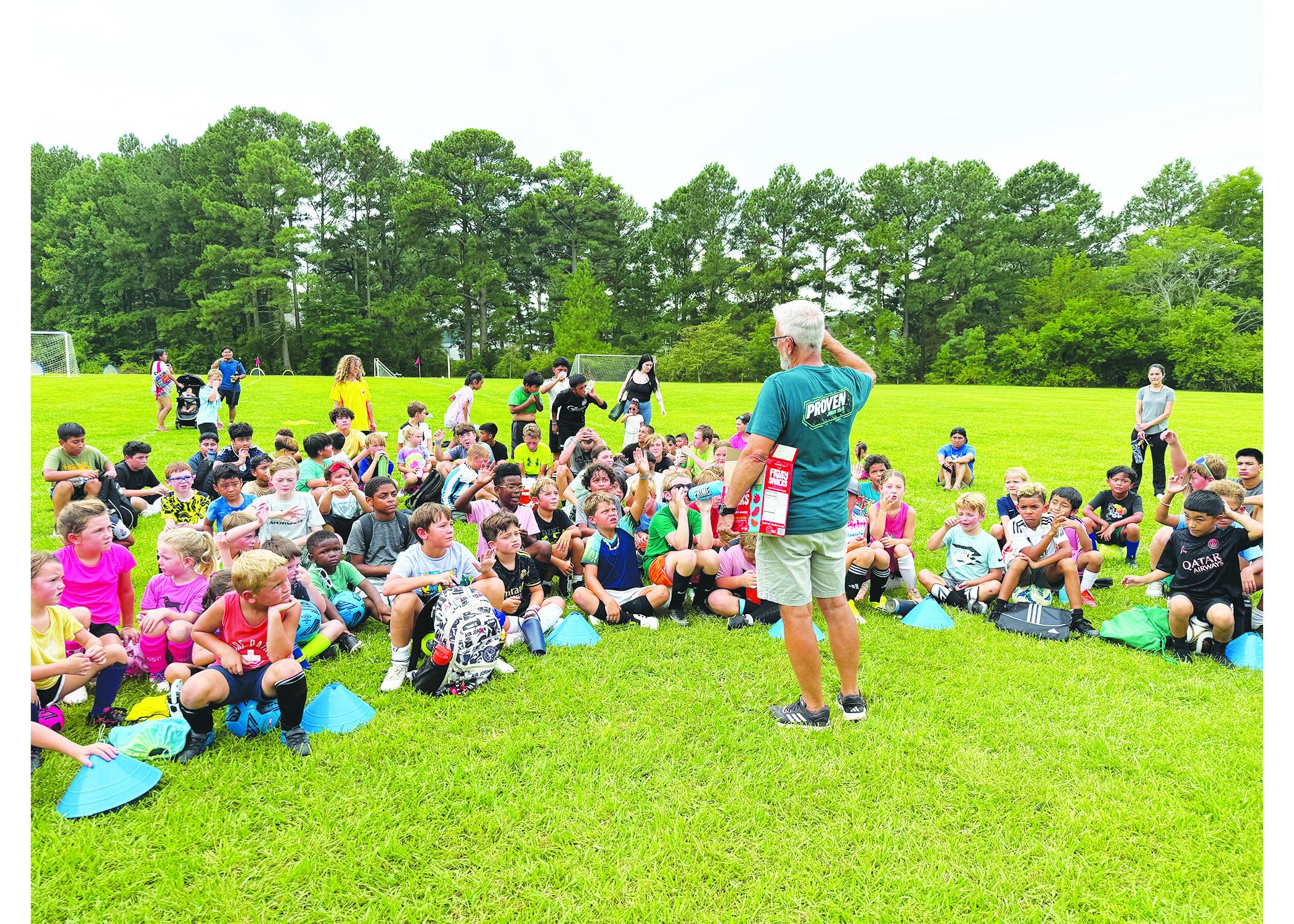
A 74-year-old Nolz looked across the soccer fields next to the Historic Onancock School on Tuesday, July 28, at smiling children, clad in cleats, ranging from as young as 4 years old to as old as 14.
“We have 100 strong now,” Nolz said of this year’s attendance.
Many children who grew up on the Eastern Shore over the last four decades remember showing up every morning to the weeklong camp, which includes prize giveaways, games, the chance to play with friends, and more.
Nolz, the pastor at Rock Church near Onley, also gives the participants some life lessons — like the importance of listening to their parents and trying their best.
The first two years of the camp Nolz operated mostly by himself until the third year, when 75 children were registered.
Nolz knew he needed some help He began recruiting high schoolers to help run the camp — and pass on their own knowledge to the participants.
Today, Nolz gets help from soccer coaches, like Nandua High School coach Miguel Diaz, but he still gets help from high schoolers who attended the camp as children.
“I like to give back because they were able to give me a start to soccer,” said Archer Johnson, a rising senior at Nandua High, who said he attended the camp every year for a span of about 10 years when he was younger.
“This is my childhood,” he said, looking out to the kids he was coaching on the field.
The camp accommodates all skill levels. Those who have never played soccer before are just as welcome as those who can’t get enough of it.
Children still have their name picked at random at the end of every day for a chance to win a prize like a jersey, water bottle, ball, or more.
Nolz still stocks coolers full of Gatorade for campers to drink during a break and still keeps an air horn handy to signal when the day is over.
Nolz said he has plenty of people who see him in public and introduce themselves by saying they attended the camp as a child and are now in their 20s and 30s.
There are now also adults who attended the camp as children, who now have children or their own and want them to have the same experience they did.
That impact is far more than Nolz ever expected when he began the camp.
“We just wanted to teach the game,” he said.